
Risk Tolerance Is a Lever.
Are You Using It?
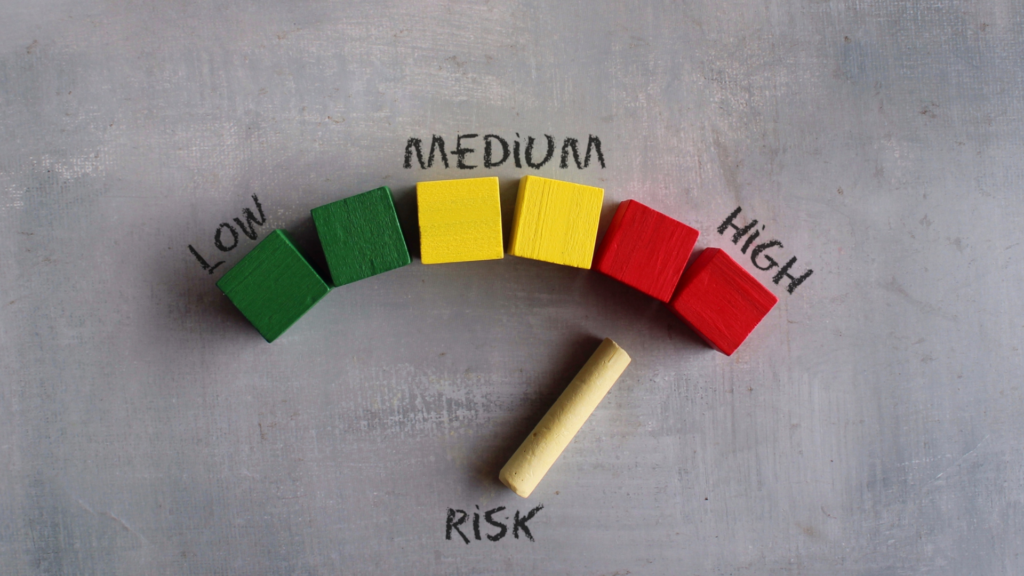
There is a relationship between risk and innovation that doesn’t get talked about nearly enough in leadership circles. It’s not complicated. But it is consequential.
Think of it this way: risk tolerance and innovation move in the same direction. Low tolerance, low innovation and impact. Higher tolerance, higher innovation and impact. They are directly connected – like treats at the dog park. You always get what you signal.
Now, I’m not here to tell you to take more risk or less risk. What I am here to say is this: risk tolerance is a lever, and as a business leader, board member, or advisory board participant, you need to know that the lever exists and that someone needs to be paying attention to where it’s set.
It’s Not One Number.
It’s a Range of Positions.
One of the most important things I’ve learned across many years as a member and Chair of a risk committee is that risk tolerance is not a single setting. It is a series of positions one for each area of your business and they should not all be the same.
Your tolerance for reputational risk might be very low. Your tolerance for operational experimentation might be higher. Your tolerance for financial reserves might sit somewhere in between. These are deliberate choices, and when they are set well, they create a coherent strategy for where caution is warranted and where energy and resources can be released.
When they are set once and forgotten? That’s where things get interesting and not always in a good way.
“Risk tolerance set and forgotten is strategy left on the table.”
A Real Example: The NFP and the Cash Question
Names and details changed, but the situation is real.
A not-for-profit organisation had a firm policy: maintain a minimum of six months of cash on hand at all times. Sensible, right? Safe, responsible, well-managed. And it was for a time.
But as the organisation grew and the sector shifted, that same cash reserve began to look less like prudent governance and more like missed opportunity. The money sat. Untouched. Protected. While the organisation struggled with outdated systems, manual processes, and a growing gap between their mission and their operational capacity.
When someone finally asked the question; what if we moved the minimum to three months? everything shifted. The released capital funded a new CRM system that saves staff hours each week. Communication with clients improved dramatically. Outreach became faster, more targeted, more human. Donation and sponsorship income increased. Not because the organisation suddenly had new ideas. But because adjusting one risk tolerance setting unlocked the capacity to act on the ideas they already had.
The message here is not ‘spend your reserves.’ The message is: leaders need to regularly review their risk tolerance levels, question them honestly, and not treat them as permanent fixtures.
A Risk That Exists Doesn’t Have to Mean Loss
Here’s a different kind of example; one where the risk couldn’t be removed, only responded to.
A building, construction, and landscaping business faced a recurring reality: extreme weather meant closure. Workers sent home. Client delivery halted. Income stopped. Costs stayed the same. And with climate patterns shifting, the number of those days was increasing each year.
With a low-tolerance mindset, the response was to allocate additional budget to absorb the financial hit. Understandable. But not transformative.
What happened instead was an advisory solution with consideration about what was actually possible on those days. What emerged was an extreme weather closure plan that turned a liability into something the business became quietly proud of.
Staff nominated charitable hours they wanted to contribute; creating a roster of people helping in the community on those days. A second group visited a local aged care facility to spend time with residents, something that became a regular monthly commitment. A third group worked through a pre-categorised client list, offering a three-month forward booking with a complimentary garden or structural health check – a package that proved remarkably popular.
The result? Quarterly income increased on extreme weather closure days. Staff satisfaction lifted. Community visibility grew. New business came in. And all of this came from a risk that had always existed, with no change to external conditions, only a change in tolerance for what a response could look like.
“You cannot always remove a risk. But you can always choose how creatively you respond to it.”
Heather DISHER
What This Means for Boards and Advisory Boards
For board members, the risk committee is not just a compliance function. The recommendations that come from your risk committee are shaped by the information they hold. Do they have visibility of your current strategic priorities? Are they aware of shifting policy environments? Do they know where the organisation wants to be in three years and what that might require in terms of tolerance for uncertainty?
If not, they are reviewing risk in a vacuum. And well-intentioned decisions made in a vacuum often protect yesterday’s organisation at the expense of tomorrow’s.
For those involved in advisory boards, this conversation is equally relevant. Advisory boards are at their best when they bring external perspective to internal assumptions. Risk tolerance is exactly the kind of assumption that benefits from that external lens; a question like ‘why is this set here?’ asked by someone without a stake in the status quo can open a conversation that insiders have been circling for months.
Risk should be owned by everyone. Risk tolerance is set by the board and actioned by the CEO and executive team.
Before You Move On from This
I’d like to leave you with something practical rather than theoretical. Three questions worth sitting with:
- When were your risk tolerance levels last reviewed? Not just by the risk committee, but in the context of your current strategy and where you want to go?
- Are your tolerance levels differentiated across risk areas, or are you running with a single-setting approach that may be applying the same caution to areas that need very different responses?
- Do the people responsible for risk recommendations have the strategic context they need to make those recommendations well?
You don’t need to move every lever to high. That’s not the goal. The goal is conscious, deliberate, regularly reviewed positioning – tolerance levels that reflect the organisation you are today and the one you’re trying to become.
Low tolerance, low innovation. Higher tolerance, higher innovation. That relationship doesn’t change. But where you set the dial and whether you’re doing it intentionally that’s entirely up to you.